New publication examines ancient Greek debate: What attracts us when we fall in love?
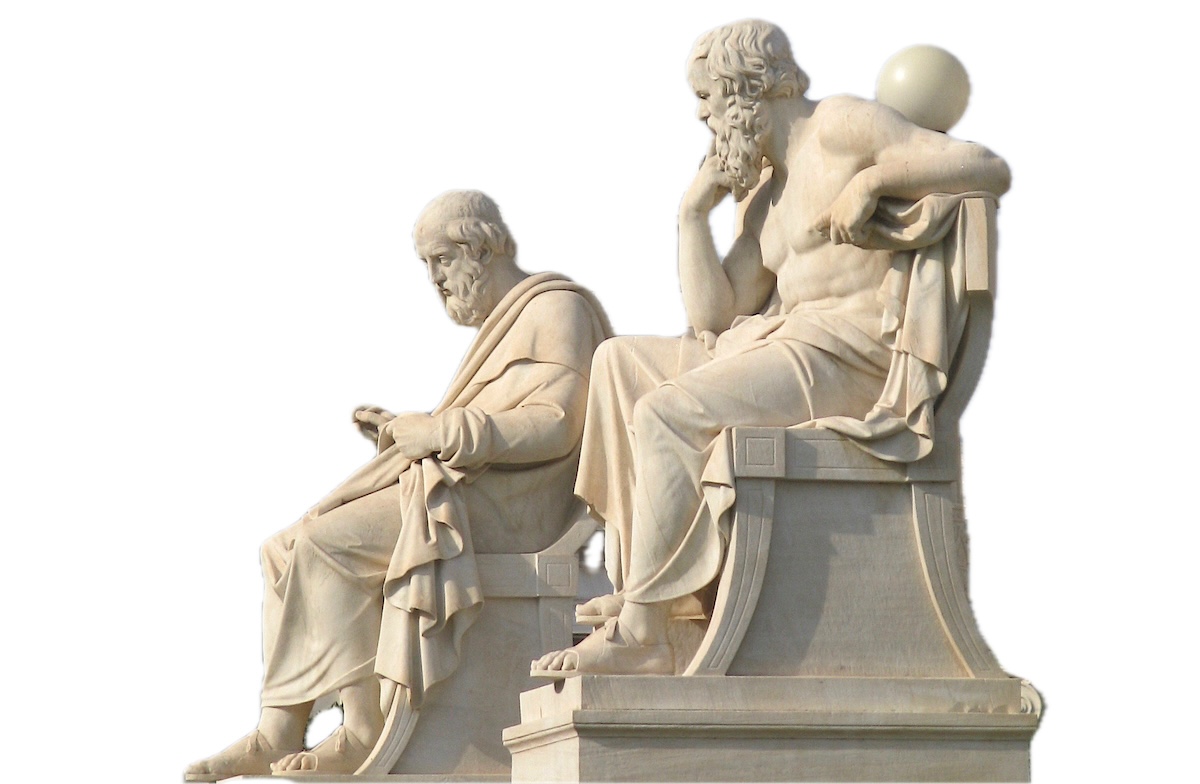
LAWRENCE — Nearly 2,500 years after it was first written, people are still discussing the meaning and resonance of the after-dinner speeches given in Plato’s “Symposium.”
The dialogue takes place at an Athenian banquet in the year 416 B.C. where the seven main characters all present a speech in praise of “eros,” which is love and the experience of being in love.
“The main question concerns, ‘What attracts us when we fall in love?’ It’s an important question, not just personally to me but probably to most people,” said Thomas Tuozzo, professor of philosophy at the University of Kansas.

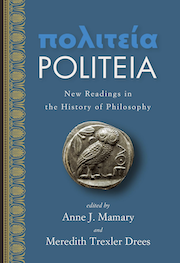
He examines this debate in a book chapter titled “Beauty Dethroned? Plato’s Symposiasts on What We Love.” The chapter appears in “Politeia: New Readings in the History of Philosophy,” which is published by State University of New York Press.
“What is it that human beings love? Is that subject to philosophical analysis? One of the speeches in this dialogue seems to suggest you’re really after some quality that Plato calls ‘beauty.’ It takes a lot of forms. You have a beautiful body. You have a beautiful character. But that’s what appeals to this emotion of love in us,” Tuozzo said.
Plato develops this further in a speech delivered by the character Socrates in which love’s highest form involves an abstract ideal beauty. This philosopher’s concept proposes there’s a distinct aspect about an individual about which you love that transcends the person.
“But if you found someone else with more of that quality, would you then love them more?” Tuozzo said.
Conversely, the speech by the character Aristophanes — perhaps the work’s most famous section — relies on a different interpretation. The comic playwright gives an analysis of love where physical or character-oriented beauty is never even mentioned.
“Aristophanes argues that love happens because the other person somehow completes you. They are particularly fitted for you. So the idea that it’s not some general quality you’re attracted to but something particular about the other person that meshes with you, I find that an interesting counterpoint,” he said.
Tuozzo, a KU faculty member of 35 years specializing in ancient Greek philosophy, has written extensively on Plato. His previous book, “Plato’s Charmides: Positive Elenchus in a ‘Socratic’ Dialogue,” was published by Cambridge University Press in 2011.
“One of the things I appreciate most about Plato is he presented both sides,” Tuozzo said.
“He’s so dialectical. His stance is that you really need to give the other side the fullest, best case you can. Plus, Plato has written about almost everything. He has such a wealth of different ideas, so there’s always something surprising that can add to the current debate.”
“Politeia” is edited by Anne Mamary of Monmouth College and Meredith Trexler Drees, who earned her doctorate at KU and now teaches at Kansas Wesleyan University. The book’s title refers to citizens’ engagement in their city and civic society.
“Politeia itself is a Greek word for constitution. It’s also the Greek title for Plato’s most famous work, which is translated into English in that context as ‘Republic,’” Tuozzo said.
How does the professor personally feel about the philosophy of love? Does he lean more toward the concepts put forth by Socrates or Aristophanes?
“The Aristophanes speech speaks more to hoi polloi, whereas Socrates speaks more to elite philosophers. On this one, I go with hoi polloi,” Tuozzo said.
“Aristophanes does say at the end that the best thing is to find the person who fully completes you. But then he realizes, how is that possible? The next best is to find someone who just does a good job of it, who’s very congenial to you. Maybe that’s the ideal.”